Serie
Lena Strid
Parchment: demand and supply in medieval Scandinavia
Lund Studies in Historical Archaeology 24
2026
| 608 s.
|
engelska,
ISSN: 1653-1183
ISBN: 978-91-90055-08-3, 978-91-90055-09-0
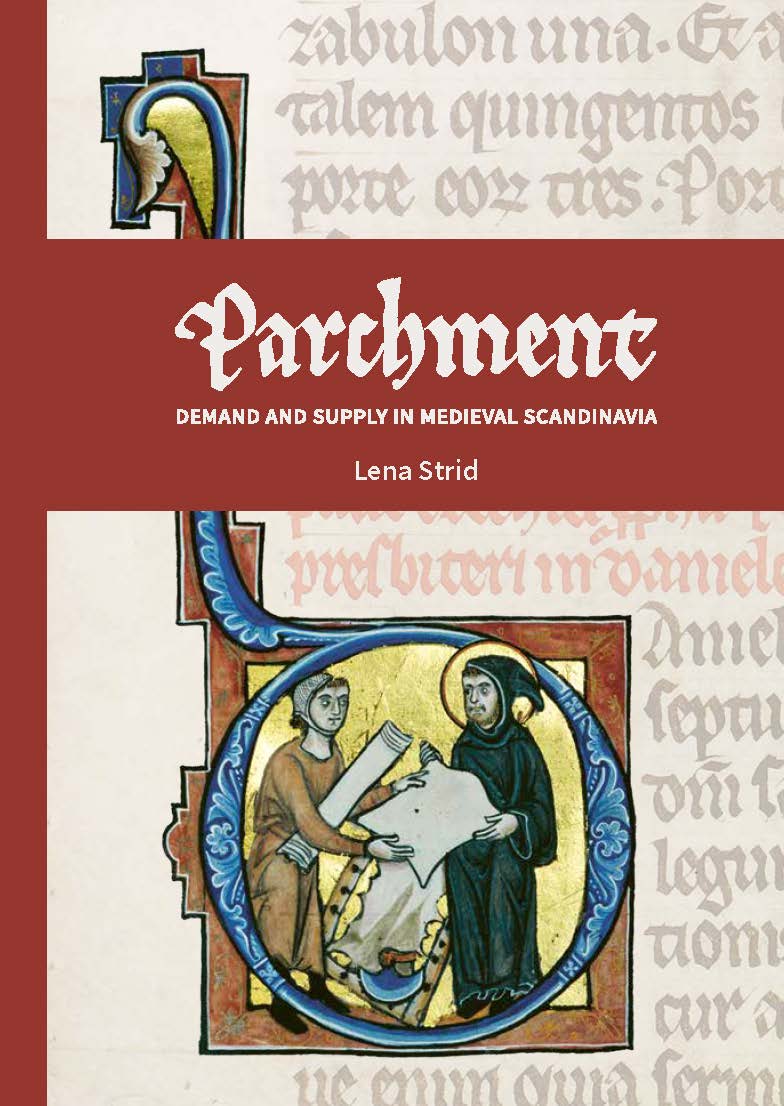
In medieval society, parchment was the backbone upon which state bureaucracy, merchant and estate records, and the religious life of priests, monks, nuns and the laity rested. Whether a gold leaf-decorated bible or a plain account book, their pages all began as animals in the field. The choice of species for making parchment depended on economic decisions regarding animal husbandry strategies, as well as on the perceived optimal suitability of calf, sheep or goat parchment for various types of documents. As literacy became more and more embedded in society, the users of parchment had to negotiate the implications of an increasing demand for writing material. This study explores the production, trade and use of parchment in medical Scandinavia through historical records, zooarchaeology and protein analyses of extant charters and codices. A survey of writing-related artefacts such as styli, wax tablets and inkwells provides further material evidence of the spread of literacy in the population. These varied data sources are used to examine the interplay between parchment production, the diachronic increase in literacy and the introduction of paper in the late Middle Ages.